Tuesday, December 15, 2020

(2254) Rice of champions

Nihon_arekore_02279_Yamashita_gohan_100_cl

The rational obviously being that if this rice is good enough for Yasuhiro Yamashita (泰裕山下) golden medalist in Los Angeles Olympics, four times world champion, 8th dan in judo and president of the  Japanese Olympic Committee, it is probably good enough for anyone.

(For a bigger version of this picture both in color and black and white, check my "Japan Arekore" set on Flickr).

(2254) Ρύζι για πρωταθλητές

Nihon_arekore_02279_Yamashita_gohan_100_cl

Το σκεπτικό προφανώς είναι ότι αν το συγκεκρμένο ρύζι είναι αρκετά καλό για τον Γιασουχίρο Γιαμάσιτα (泰裕山下), χρυσό ολυμπιονίκη στο Λος Άντζελες, τέσσερις φορές παγκόσμιο πρωταθλητή και 8ο νταν στο τζούντο και πρόεδρο της Ιαπωνικής Ολυμπιακής Επιτροπής, μάλλον είναι αρκετά καλό και για οποιονδήποτε άλλον. 

(Για την ίδια φωτογραφία σε μεγαλύτερο μέγεθος και σε μαυρόασπρη εκδοχή, δείτε το σετ «Japan Arekore» στο Flickr).


Monday, December 14, 2020

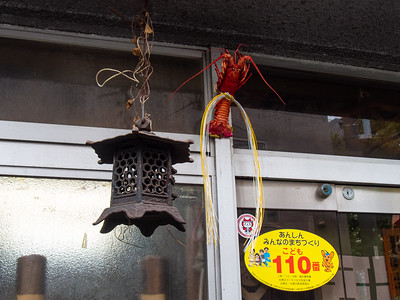
(2253) Still life

Nihon_arekore_02278_Festive_lobster_100_cl

With lantern and festive lobster -to be accurate "ise-ebi" (伊勢海老): they are considered symbols of longevity because their shell is curled like an old person's back. 

(For a bigger version of this picture both in color and black and white, check my "Japan Arekore" set on Flickr).


(2253) Νεκρή φύση

Nihon_arekore_02278_Festive_lobster_100_cl

Με φανάρι και εορταστικό αστακό  -για την ακρίβεια "ίσε-έμπι" (伊勢海老): θεωρούνται σύμβολα μακροζωΐας γιατί το καβούκι τους είναι καμπουριασμένο όπως η πλάτη ενός ηλικιωμένου. 

(Για την ίδια φωτογραφία σε μεγαλύτερο μέγεθος και σε μαυρόασπρη εκδοχή, δείτε το σετ «Japan Arekore» στο Flickr).


Friday, December 11, 2020

(2252) No matter how many times I see it...

Nihon_arekore_02277_Girl_reading_with_shoes_off_100_cl

 ...or what is the age of the person doing it, it never ceases to amaze me. 

(For a bigger version of this picture both in color and black and white, check my "Japan Arekore" set on Flickr).


(2252) Όσες φορές και αν το δω...

Nihon_arekore_02277_Girl_reading_with_shoes_off_100_cl

 ...και άσχετα από την ηλικία αυτουνού που το κάνει, δεν παύει να με εντυπωσιάζει. 

(Για την ίδια φωτογραφία σε μεγαλύτερο μέγεθος και σε μαυρόασπρη εκδοχή, δείτε το σετ «Japan Arekore» στο Flickr).


Thursday, December 10, 2020

(2251) Kitty-chan, part -I've lost count

Nihon_arekore_02276_Kitty_chan_contact_lenses_solution_100_cl

This time in contact lenses solution. (We all remember "Kitty-chan" is the Japanese name for "Hello Kitty", right?)

(For a bigger version of this picture both in color and black and white, check my "Japan Arekore" set on Flickr).


(2251) Κίτι-τσαν, μέρος -έχω χάσει τον λογαριασμό

Nihon_arekore_02276_Kitty_chan_contact_lenses_solution_100_cl

Αυτή τη φορά σε υγρό για φακούς επαφής. (Όλοι θυμόμαστε ότι "Κίτι-τσαν" λέγεται στα ιαπωνικά η "Hello Kitty", έτσι;)

(Για την ίδια φωτογραφία σε μεγαλύτερο μέγεθος και σε μαυρόασπρη εκδοχή, δείτε το σετ «Japan Arekore» στο Flickr).


Wednesday, December 9, 2020

(2250) In one of Ginza's back streets...

Nihon_arekore_02275_St_Luke_Ginza_100_cl

...and over the back entrance of one of the big fashion houses, the symbol of Luke the Evangelist. With no other information.  

(For a bigger version of this picture both in color and black and white, check my "Japan Arekore" set on Flickr).


(2250) Σε ένα από τα πίσω στενάκια της Γκίνζα...

Nihon_arekore_02275_St_Luke_Ginza_100_cl

...και πάνω από την πίσω πόρτα ενός από τους μεγάλους οίκους μόδας, το σύμβολο του ευαγγελιστή Λουκά. Χωρίς καμία άλλη πληροφορία. 

(Για την ίδια φωτογραφία σε μεγαλύτερο μέγεθος και σε μαυρόασπρη εκδοχή, δείτε το σετ «Japan Arekore» στο Flickr).


Tuesday, December 8, 2020

(2249) Akebono-yu

Nihon_arekore_02274_Akebono_yu_100_cl

 In Japanese,  "曙湯" or "dawn's hot bath", one of the Asakusa's sento  (銭湯) public baths, founded in 1949; incidentally, "yu" which means "hot water" is a very common part of sento's names. The architecture is very characteristic for sento: it's called "miyazukuri" (宮造り) which means "Shinto shrine style" and although at first sight it looks very old and traditional, it started after the big Tokyo earthquake of 1923.

(For a bigger version of this picture both in color and black and white, check my "Japan Arekore" set on Flickr).